Moisture in concrete slabs is one of the leading causes of commercial flooring failures. Understanding when moisture mitigation is needed helps protect your flooring investment and prevent costly problems down the road.
Why Moisture Matters
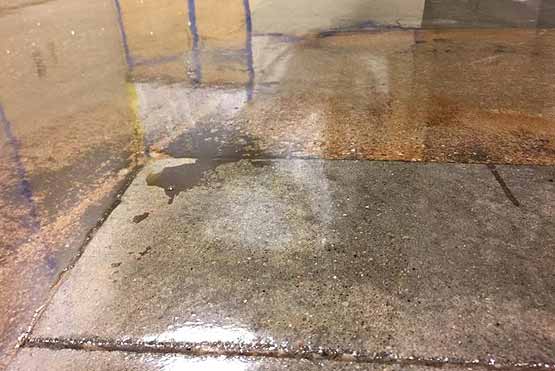
Concrete slabs naturally contain moisture, and some moisture is normal. However, excessive moisture can cause serious problems with flooring installations. Moisture can break down adhesives, cause flooring materials to expand or contract, promote mold growth, and void manufacturer warranties. These issues lead to flooring failures, costly repairs, and premature replacement.
When Is Mitigation Needed?
Moisture-Sensitive Flooring Materials
Some flooring materials are more sensitive to moisture than others. LVT/LVP, sheet vinyl, and certain adhesives require specific moisture levels to perform correctly. Manufacturer specifications typically require relative humidity levels below 75-80% or calcium chloride test results below certain thresholds. When these levels are exceeded, mitigation is necessary.
Ground-Level and Below-Grade Installations
Ground-level and below-grade concrete slabs are more prone to moisture issues due to ground water and lack of ventilation. These installations almost always require moisture testing, and mitigation is frequently needed. Even if initial testing shows acceptable levels, ongoing monitoring may be recommended.
New Construction
New concrete slabs contain significant moisture that needs time to dry. Industry standards typically recommend allowing new slabs to cure for 28-90 days before installing moisture-sensitive flooring. However, even after curing periods, moisture testing is essential, and mitigation may still be required.
Visible Moisture Issues
Visible signs of moisture problems include efflorescence (white powdery deposits), dark spots, or areas that feel damp. These visible indicators suggest elevated moisture levels that require testing and likely mitigation.
Moisture Testing Methods
Relative Humidity Testing
Relative humidity (RH) testing uses probes inserted into the concrete slab to measure internal moisture levels. This method, following ASTM F2170 standards, provides accurate readings of slab moisture conditions. RH testing is considered the most reliable method for assessing moisture in concrete.
Calcium Chloride Testing
Calcium chloride testing, following ASTM F1869 standards, measures moisture vapor emission from the slab surface. This method provides surface moisture readings and is commonly used for certain flooring types. Results are typically expressed in pounds per 1,000 square feet per 24 hours.
Moisture Mitigation Systems
When mitigation is needed, various systems are available. Moisture barrier systems create a barrier between the slab and flooring. Epoxy moisture control systems seal the slab and provide a stable base. The appropriate system depends on moisture levels, flooring type, and project conditions. Professional assessment ensures the right solution for your specific situation.
The Cost of Skipping Mitigation
Skipping moisture mitigation when needed can lead to flooring failures, adhesive breakdown, mold growth, and voided warranties. These problems often require complete flooring replacement, costing significantly more than proper mitigation. Investing in mitigation protects your flooring investment and prevents costly failures.
Working with Professionals
Professional commercial flooring contractors understand moisture issues and testing requirements. During site walks, we assess conditions and recommend testing when appropriate. Our proposals include moisture testing and mitigation when needed, ensuring your installation is protected from moisture-related failures.